
Nvidia vs AMD GPUs : Real Prices & Benchmarks
By the RigVault Hardware Team · Last updated September 5, 2026 · Pricing and benchmarks checked against independent testing as of publication
Brand loyalty makes for a fun forum argument, but it’s a bad way to spend $500+ on a graphics card. Here’s what actually separates Nvidia and AMD right now, using real models, current street prices, and independent test results.
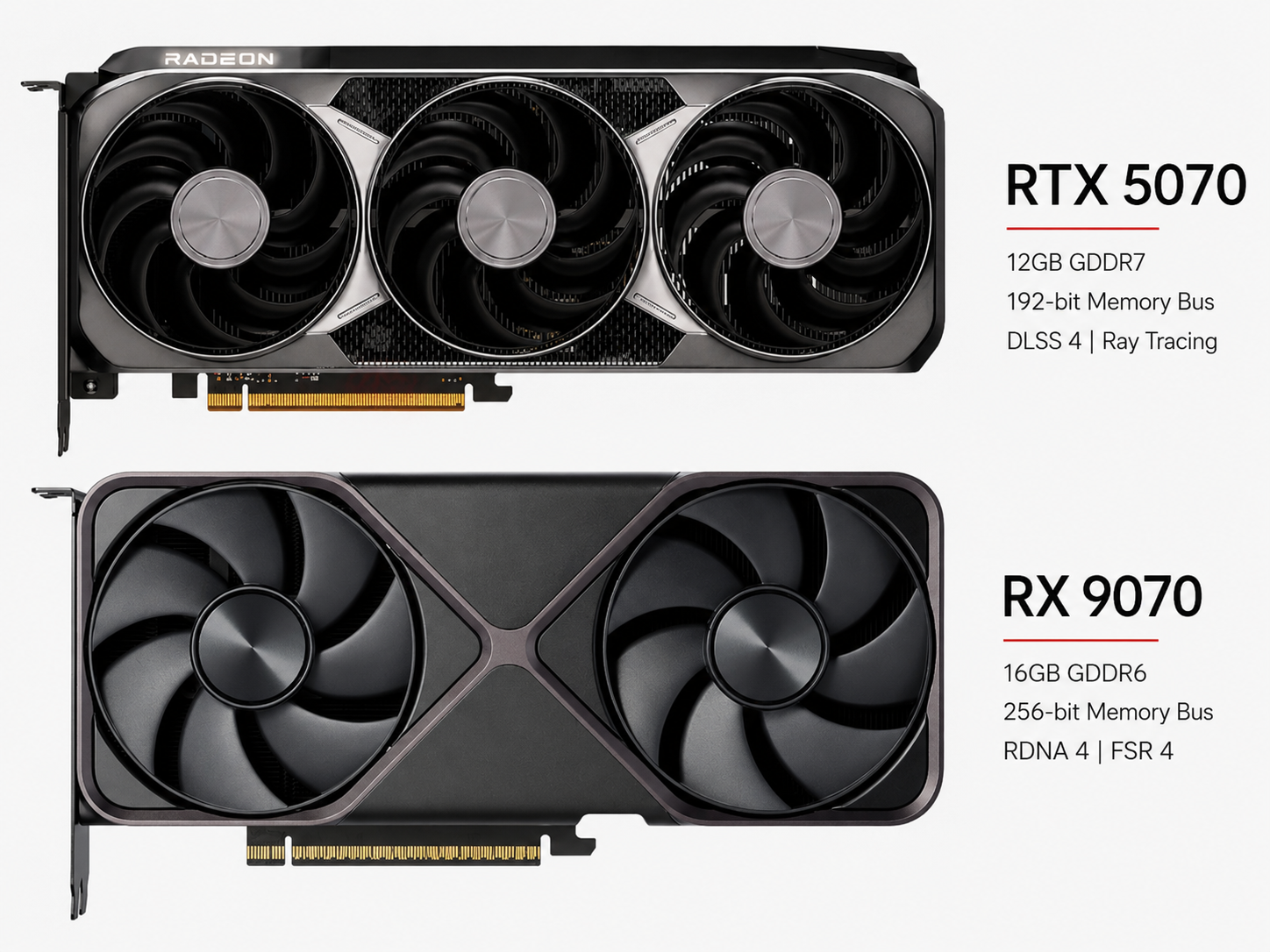
The Head-to-Head Everyone’s Actually Buying: RTX 5070 vs RX 9070
Both cards share the same $549 MSRP, which makes this the cleanest same-price comparison in the current lineup.0
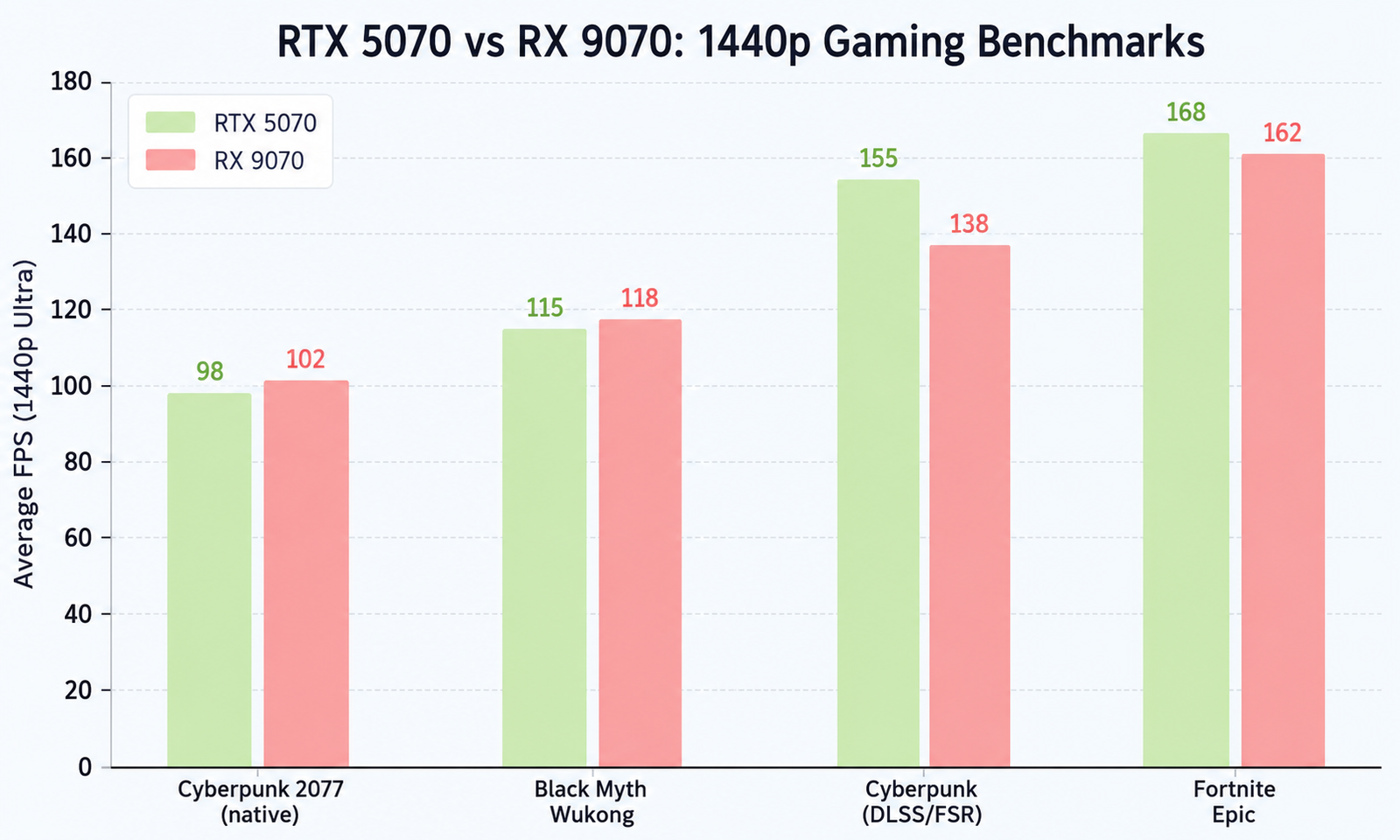
What IndepWhere Nvidia Wins Back the Gapendent Testing Found
Ray tracing tells a different story. In path-traced workloads, the RTX 5070’s lead over the RX 9070 has been measured as high as 40% in the most demanding titles. DLSS 4’s Multi Frame Generation is also Nvidia-exclusive, which matters if you play upscaling-supported titles and want the highest possible frame rate on screen rather than native rendering.
One Tier Up: RTX 5070 Ti vs RX 9070 XT
This matchup sits at a higher price band and tells a more nuanced story than the 5070 vs 9070 fight.
Real Numbers
According to UL Solutions’ August 2026 benchmark aggregate, the RX 9070 XT posted a Steel Nomad score of 7,273 at a street price around $670-810, while independent testing from a separate June 2026 GPU roundup measured the RTX 5070 Ti about 4% ahead at 4K rasterization and roughly 15% ahead in ray tracing.
Budget Tier: RTX 5060 Ti 16GB vs RX 9060 XT 16GB
At the ~$350-450 price band, VRAM capacity and efficiency matter more than raw horsepower for most buyers.
Real Pricing and Specs
• RTX 5060 Ti 16GB: ~$429 MSRP, 4,608 CUDA cores, 16GB GDDR7, 180W TGP
• RX 9060 XT 16GB: ~$349 MSRP, 2,048 stream processors, 16GB GDDR6, similar power envelope
Independent 1080p benchmark averages put the RTX 5060 Ti and RX 9060 XT within a few frames of each other in most titles — this tier comes down more to price and available deals than a clear performance winner
VRAM and Power Efficiency: Where AMD Consistently Leads
Across nearly every matching price tier, AMD ships more VRAM than Nvidia’s competing card — 16GB vs 12GB at the $549 tier being the clearest example. This gap matters increasingly as current AAA titles push past 8-10GB usage at high settings.
Power Draw and Connectors
AMD’s current-generation cards generally run at somewhat lower TGP than Nvidia’s directly competing tier (220W vs 250W at the $549 price point, for example), and AMD has stuck with standard 8-pin PCIe connectors rather than requiring the newer 16-pin adapter some Nvidia cards use.
Ray Tracing and Upscaling: Nvidia’s Consistent Advantage
This is the one category where Nvidia’s lead holds consistently across every tier tested. DLSS 4’s image quality and Multi Frame Generation remain ahead of AMD’s FSR implementation, and the ray tracing performance gap widens the more demanding the workload gets — from roughly 3-5% at lighter ray tracing settings up to 40% in full path tracing.
The Actual Verdict by Use Case
• Best value at 1440p on a budget: RX 9070 or RX 9060 XT 16GB — more VRAM, competitive raster performance, usually cheaper at street price
• Best for ray tracing and upscaling: RTX 5070 or RTX 5070 Ti — DLSS 4 MFG and stronger path tracing performance
• Best for content creation alongside gaming: RTX 5070 Ti — dual NVENC encoding and stronger AI/CUDA workload performance
Conclusion
Neither brand is universally “better” in 2026. At the identical $549 price point, AMD’s RX 9070 wins rasterized performance and VRAM capacity, while Nvidia’s RTX 5070 wins ray tracing and upscaling quality. Match your choice to whether ray tracing or raw rasterized value matters more for the games you actually play.